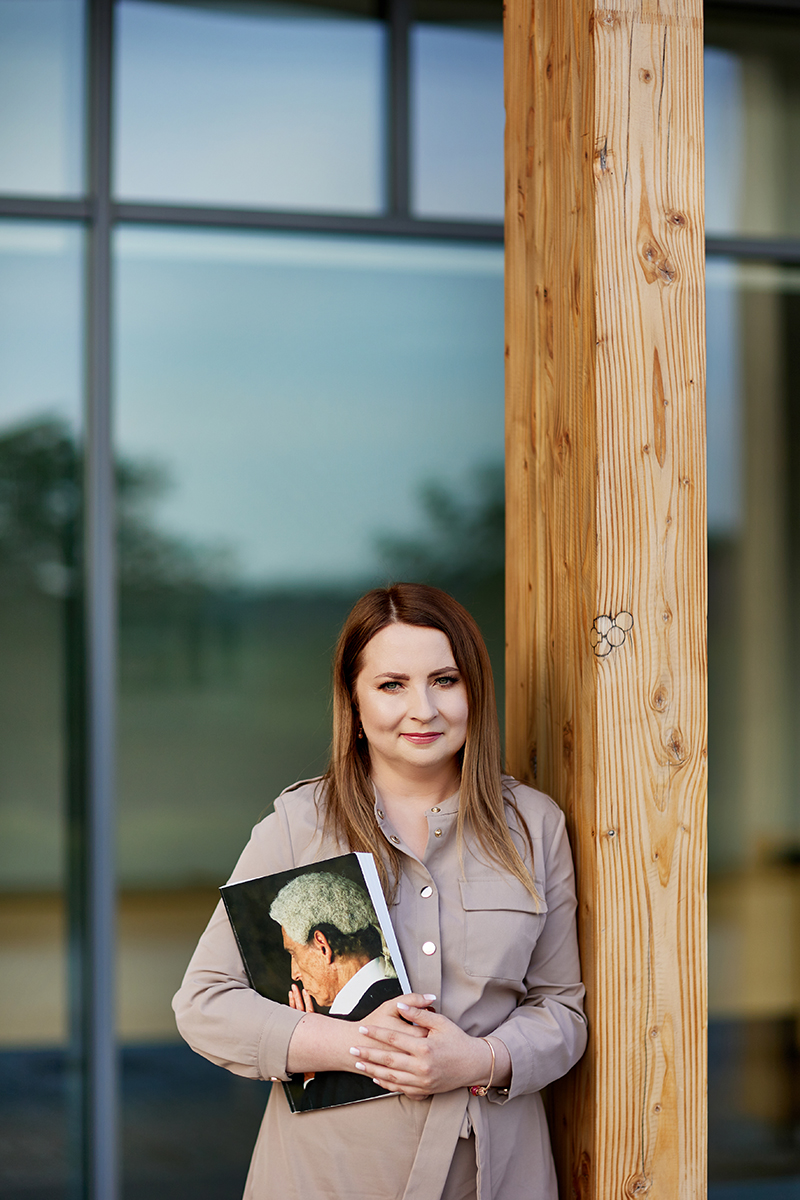


On the Fashionably Legal blog, where law meets fashion, we talk to inspiring women who not only build their image but also consciously shape it in a world full of professional, social, and legal challenges. Our guest is Barbara Kohlbrenner, stylist, image consultant and initiator of the event Blask Kobiecości, who combines her passion for fashion with the idea of feminine power and personal development.
In the interview, she talks about the behind-the-scenes organisation of women’s events, the biggest challenges in a stylist’s job, and how the law permeates the fashion world – from image protection to copyright. We also ask her about her sources of inspiration, her professional development, and her advice for those who dream of a career in the world of styling and fashion.
More about Barbara Kohlbrenner’s work and projects can be found on the website:
https://barbarakohlbrenner.pl/
FL: What prompted you to organize the Sparkle of Womanhood event?
I was prompted to organize the Sparkle of Womanhood workshop by my birthday… which falls on Valentine’s Day. So, I thought it was the perfect time to prepare an event full of love for oneself for Women. Women sorely lack a sense of acceptance and self-confidence. And the idea of discovering inner beauty and bringing out outer radiance is a leitmotif in my work. So, it was a day full of celebrating female energy, to remind women that they are important and beautiful. After the workshop, one participant said: “Today I was reminded that I am beautiful. I am filled with gratitude.” These words are the best reflection of how valuable this event was for Women.
FL: What are the biggest challenges in a stylist’s job, especially in terms of working with
clients?
There are plenty of challenges at work, but the most important thing is to thoroughly understand the client’s needs and propose solutions in respect of their personality, sensibilities, and aesthetics. It is not about style revolution and radical metamorphoses, but about a process of change. On the client’s part, trust, openness to change and moving beyond the usual patterns and beliefs about oneself are essential.
FL: Do you encounter legal issues in your business, such as those related to copyright, image protection or contracts with brands?
Yes, legal issues, image protection are very important. It is an integral part of the business.
FL: How do you assess the importance of the law in the fashion industry? Do you think stylists should be more aware of their rights and responsibilities?
I think this subject matter is not specified and clear to stylists. This is where I am counting on your advice on this issue. So, what are the rights and responsibilities of stylists? Where can such regulations be found?
FL: As a law graduate and a postgraduate in fashion law, I completely understand your point — and I fully agree with it. Indeed, in Poland, there is a lack of clear and widely accessible resources outlining the rights and responsibilities of stylists, and the image consulting industry itself often lacks the necessary legal tools.
Yet, a stylist — as a professional offering image-related services — is subject to a wide range of regulations. These include civil law (such as contracts with clients or brands) and intellectual property law (styling as a creative work, rights to photos, collaboration with photographers, and image rights of clients or models). There are also issues related to running a business, accounting, and the processing of personal data (in line with GDPR).
That’s why I believe there is a real need for greater legal awareness in this field — and it’s precisely the reason why the LAWISH platform and the Fashionably Legal blog were created: to support professionals like you in navigating the intersection of law and fashion. I truly appreciate your openness in highlighting this gap — recognizing the need for knowledge is the first step towards real change.
Fashion inspiration can be found literally everywhere. They are at your fingertips – on the street, on the internet, in fashion magazines and publications. Fashion inspiration is not only about fashion in the literal sense of the word. Every dimension of sensitivity to beauty, quality and aesthetics is valuable. For me, exhibitions, museums, and cultural events are important sources. Every trip I take starts or ends with a visit to an exhibition in the area. I listen a lot to podcasts about art. It is remarkable how fashion and art influence each other. I am also a certified coach, having completed the ‘Psychology in Coaching’ courses at Jagiellonian University, as I believe that the psychological aspect is extremely important when working with people.
FL: Could you please tell us what your favourite sources of fashion inspiration are and how you take care of your professional development?
For those who want to start working as a stylist, I provide individual and group training. Last year I created the Academy for Image Consultants, where I share my 13 years of experience and prepare one very practically to work with a demanding client. Anyone can try it if their heart beats harder when they see nice clothes, they have a sense of mission, they want to work on their terms, and they enjoy working with people. You don’t have to quit your full-time job right away. The profession of stylist can be an additional job to start with, and it can be done stationary or remotely. It’s a job that never gets boring and is very rewarding.
FL: Thank you for the interview.
A conversation with Barbara Kohlbrenner showed us that style is not just about clothes – it is the way we communicate our strength, values, and professionalism. It is also a space where fashion and law meet more often than you might think. Thank you for the inspiring conversation and valuable tips, which will certainly prove helpful not only for aspiring stylists but for everyone who wants to build their image – in life and at work consciously.